All Categories
Featured
Table of Contents
Preserving a gorgeous lawn can be an enjoyable leisure and include significant value to your home. The amount of time invested will determine the quality, with outcomes varying from high-maintenance lawns that are lush, watered throughout the summertime, and virtually weed complimentary to medium-maintenance yards that have some weeds and may be permitted to go inactive throughout the summer to low-maintenance yards that receive little to no fertilizer and are mowed infrequently.
The Benefits of Drought-Hardy Lawn in Your AreaCutting is the most essential factor in keeping a yard healthy. There are a few considerations for good mowing strategy: Keep the lawn cut in between 23 inches tall. Use the lower mowing heights for greater quality yards and the greater heights for lower input lawns. Follow the "13 rule" for cutting: never ever remove more than one-third of the leaf tissue at any one mowing.
Removing more than one-third of the leaf tissue at one time makes the turf more susceptible to ecological tensions and pest damage, slows regrowth, and exposes the soil to light, which promotes germination of weeds. A plant's rate of growth is continuously altering depending upon temperature level, time of year, water, and soil fertility.
Top Home Lawn Maintenance Plans for 2026
Lawns may need to be mowed two times a week throughout spring, or every 2 weeks during a hot, dry summer season. The frayed ideas of torn leaves dry out rapidly, offering the yard a brownish to whitish look.
Depending on the amount and roughness of use, mower blades require to be sharpened every 13 years. Lots of hardware shops and turf equipment dealers provide this service for a small charge. Cutting damp turf causes the clippings to form clumps on the yard and can be hazardous for the operator, particularly on wet slopes.
Leaving the clippings in place has several benefits. Initially, the clippings include nitrogen and other essential nutrients; leaving them in location returns the equivalent of about 1 pound of nitrogen per 1,000 square-feet each year (this amounts to one normal fertilizer application) to the soil. Second, it conserves time given that you don't need to stop often to clear the bag.
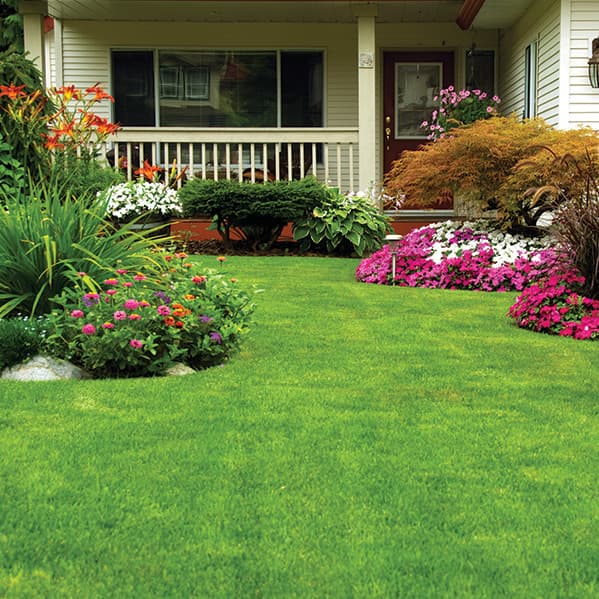
Future Home Maintenance Trends for Modern Neighborhoods
If you follow the 1/3 guideline for mowing, the clippings will be small enough that they will decay rapidly. Grass clippings are more than 90% water and do not add to thatch production. If the turf becomes too tall or thick and clippings do need to be collected they can be composted.
Clippings can likewise be utilized as mulch. However, do not use clippings as mulch in decorative beds or gardens if you have actually applied herbicides to the lawn within the preceding 3 months. Normally any lawn mower can be utilized as a "mulching" mower. The simplest mulching mowers do not have an exit chute, while advanced systems might have 2 sets of blades to help cut clippings into smaller sized pieces.
General yard fertilizers in Wisconsin contain nitrogen, and a percentage of potassium. Phosphorus is not allowed to be applied unless a soil test reveals the need for phosphorus or if the location is newly seeded or sodded. A lot of soils in Wisconsin consist of adequate phosphorus and potassium for established grass, though phosphorus is often useful for promoting germination and facility of seedlings.
The Benefits of Drought-Hardy Lawn in Your Area
Essential Strategies for Maintaining the Healthy Local Landscape
Nutrients such as sulfur, calcium, magnesium, and others are likewise used by grass but are plentiful in most soils in Wisconsin so they are hardly ever added to fertilizer. Most yards need approximately 3 pounds of nitrogen per 1,000 ft2 each year. This is equivalent to 3 applications utilizing the "typical" rates listed on most fertilizer bags, around 1 pound of nitrogen per 1,000 ft2.
Do not exceed 1 pound of nitrogen per 1,000 ft2 at any single applicationas the turf will not have the ability to utilize all of the nitrogen. Excess nitrogen can cause extreme lawn growth, minimize the root development, encourage some illness, and even eliminate the lawn if excessive is applied.
For premium grass, a simple way to keep in mind when to fertilize is to use the "holiday schedule," fertilizing around Memorial Day, the Fourth of July, Labor Day, and Columbus Day/Indigenous Peoples Day (early October). Suggested fertilization durations for Wisconsin yards If a low- or medium-maintenance (and quality) lawn is desired, couple of fertilizations are required.
Why Hire Expert Property Care for Your Yard
At this time the lawn is actively growing and can totally use the used nutrients. There are 2 types of spreaders, the drop spreader and the broadcast, or rotary, spreader. As the name shows, fertilizer falls through holes in the bin of a drop spreader.

Latest Posts
What You Should Anticipate From Working With An Amsterdam Romance Advisor
New Regional Standards for Sustainable Lawn Care
Meeting Elite Property Guidelines Through Professional Maintenance